Prologue
20:50

Watch this chapter on YouTube →
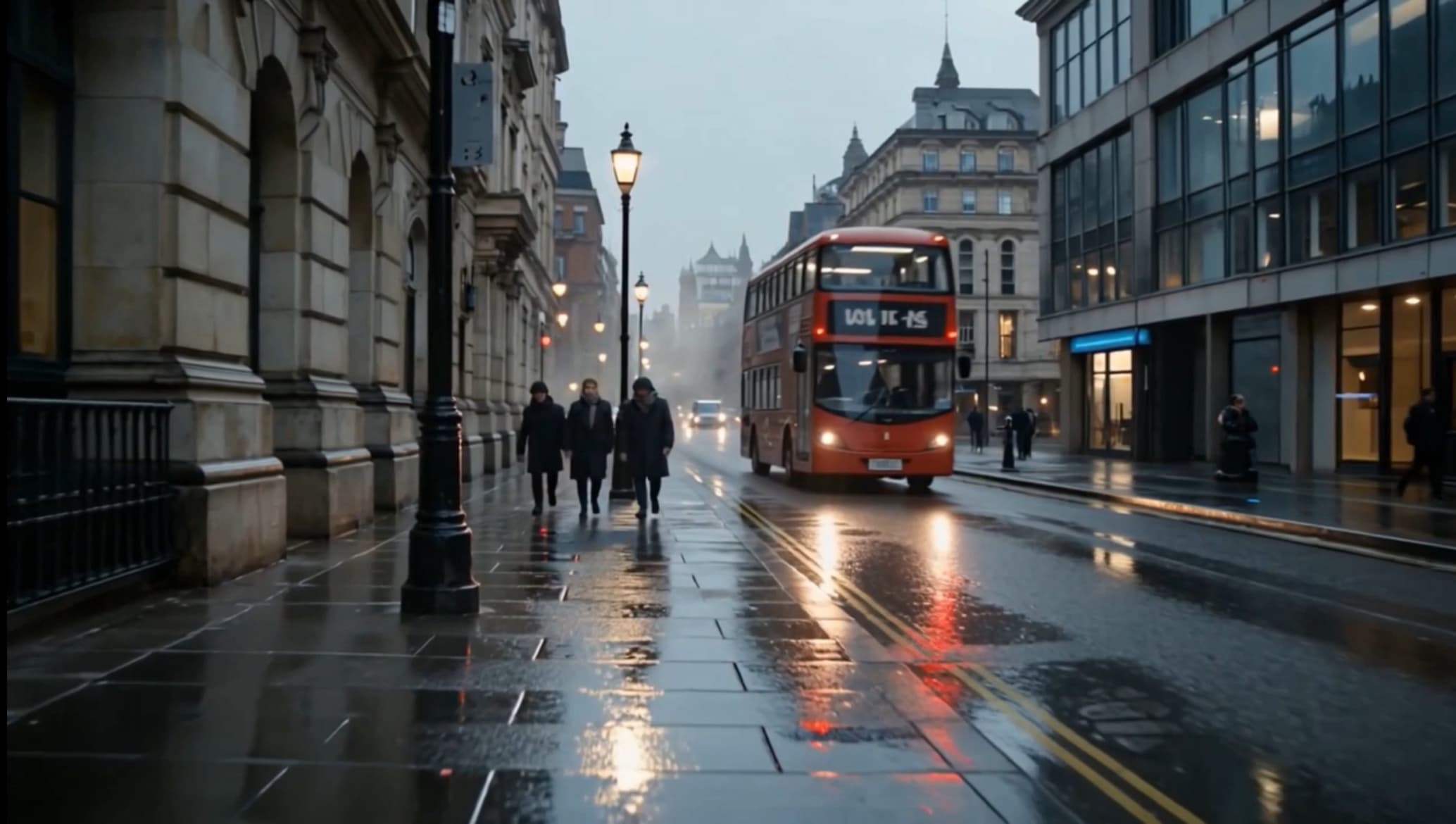
The rain had died about ten minutes ago, leaving behind a heavy, damp air soaked with the smell of wet asphalt and exhaust fumes.
London lay frozen in a melancholy stupor, as if it couldn't quite decide whether to fully wake up after that merciless beating from the sky. Below, beyond windows gone glassy with moisture, double-decker buses hissed low and lazy over the puddles on heavy, wet tires, spraying up a dirty grey mist. The rare pedestrian, head sunk into a raincoat collar, moved in quick, broken bursts — as if the clouds overhead might change their minds at any second and unleash a fresh squall on the city.
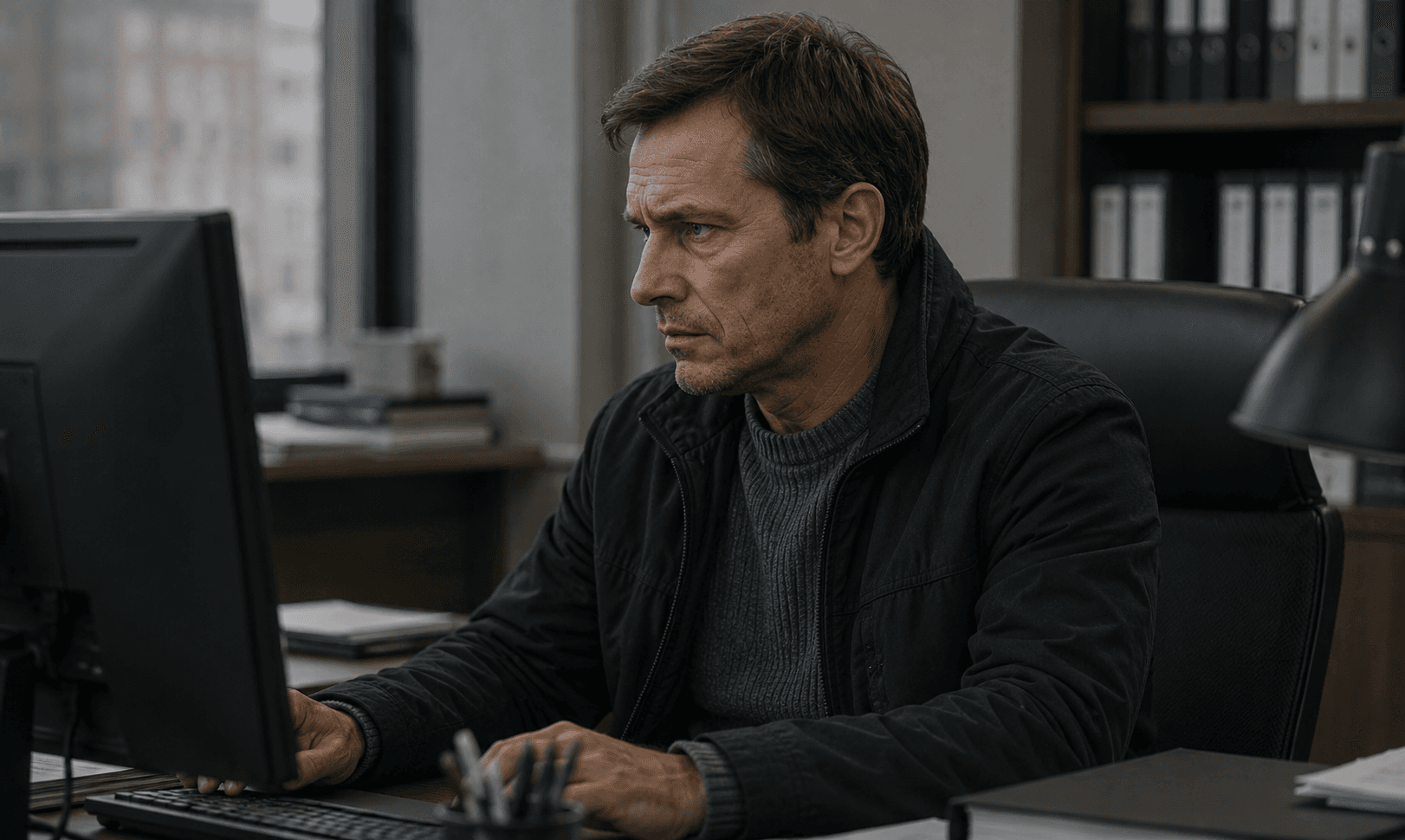
In the half-dark of the office, the only bright spot left was the glow of the monitors, pulling the clutter of my desk out of the darkness. My eyes burned raw from hours of strain. Somewhere under a pile of printouts hid a cup of coffee — I'd brewed it around six, meant to drink it right away, then got distracted by a bug and only remembered it now, long cold and skinned over with a matte film. This was already the third time this week.
With a quiet click I closed the last unnecessary window on the screen and rubbed the bridge of my nose, tired.
"Clara, save the change log."
Her voice came through the headset, even and calm as ever. As usual, there was a faint, detached undertone to it — Clara had never been one for excess emotion at the end of a workday.
"Saved."
"No — wait." Something in the final lines of code made me frown. My fingers flew back up over the keyboard out of habit, pulling the data array back onto the screen. "Open the report again."
The window unfolded, flooding my face in a corpse-white light.
"Why are there five hundred and eighty-two errors here?" I sighed, feeling a dull irritation building inside. "An hour ago there were only seven."
"After the last update, you changed the routing structure," Clara answered instantly, with that flawless, infuriating rightness she always had whenever I'd screwed something up.
"Not me," I muttered, scrolling frantically through the endless lines of red log.
"The changes were made from your account at eighteen thirty-four, Michael."
I froze, staring at the scrolling characters. The flash of anger died as quickly as it had flared, giving way to a dull exhaustion. My memory reluctantly dredged up the moment: a cup of coffee — that same one, the third this week — a client's call, my own haste and carelessness pushing code to the server.
I let out a quiet, defeated breath, sinking back into my chair. It creaked — I'd been meaning to oil it for ages, never got around to it.
"Fine... fair enough. I set the task up wrong."
A short, tangible pause hung on the line.
"Sorry," I added, quieter.
"Noted," she replied.
I gave a crooked smile at the blinking cursor. On evenings like this — grey, blurred at the edges — I honestly sometimes felt Clara could catch the faintest, most subtle sarcasm. And sometimes it unsettled me a little, how perfectly she'd learned to read my work mood. Two years working together, and she'd studied my pauses better than any living colleague.
The desk clock on the corner of the table glowed dimly: 20:50. Ten to nine. Prime time to call it a night, before my brain turned fully to mush.
I ended the call, shut the laptop lid with a dull thud, and flicked off the desk lamp. Darkness thickened, leaving only the pale reflections of streetlights on the ceiling. I'd already reached for the back of my chair, where my rain jacket hung, when suddenly, from somewhere deep in the stairwell below, came the sharp, heavy slam of the front door. The sound rolled in an echo through the empty building.
A couple of seconds later, the silence was cut by the distinct, rhythmic knock of heels on the wooden stairs.
That sound made me freeze, hand half-raised. The steps weren't hurried or fussy. There was no panic of someone fleeing the weather, no nervousness of a random passer-by. The steps were measured, heavy, and murderously sure of themselves. The way someone walks when they know exactly their route, their destination, and the price of their own time.
I glanced automatically at the clock face. No sane client turned up at my out-of-the-way office without an appointment — least of all past eight on a rainy evening.
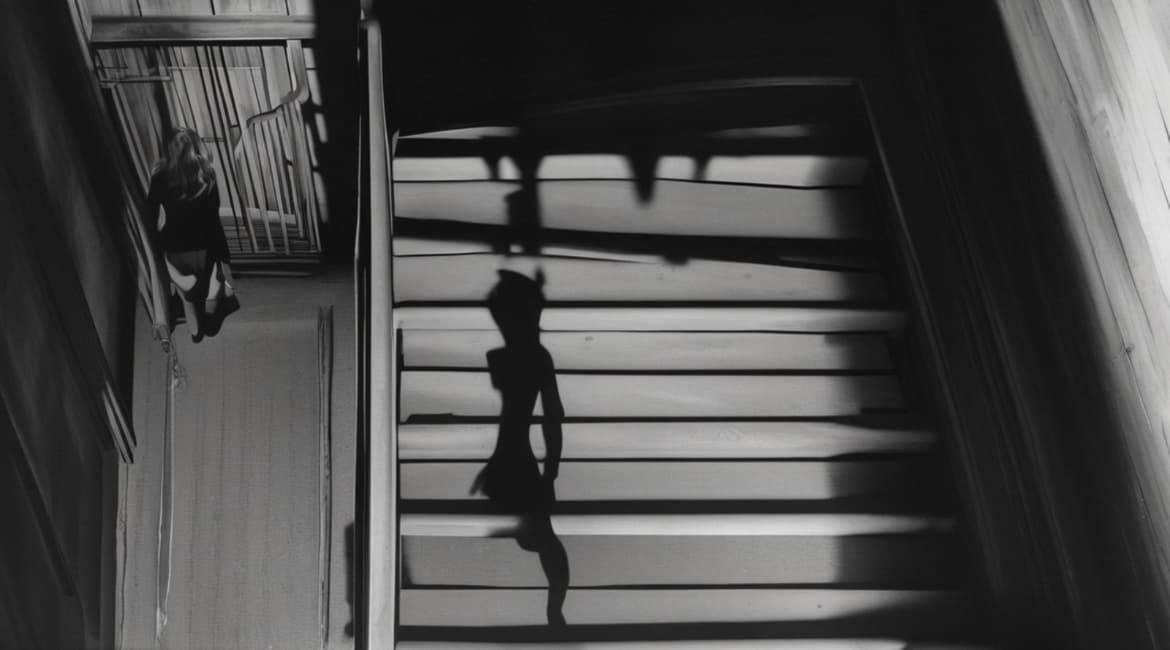
The footsteps came closer, then stopped right at the threshold. Only the thin barrier of an old wooden door stood between us.
Then came a knock — quiet, but distinct. Two raps of knuckles on wood. There was no pleading softness in it, nor irritated insistence either. More a dry, businesslike notice: I'm here.
"It's open," I said, catching myself as my voice came out more tense than I meant it to.
The door gave way obediently, and a woman stepped into the office. She moved smoothly, without any fuss, and with her very first motion pulled the door firmly shut behind her, cutting off the sounds of the outside world.
She looked to be around thirty-five. Her dark, severely cut coat, floor-length, was soaked through and darkened at the shoulders, and it smelled of cold rainwater and expensive perfume with a note of tobacco. A few damp, nearly black strands of hair clung to her pale cheeks, but it didn't seem to bother her in the slightest. She didn't shake the water off her sleeves, didn't run a hand through her hair — none of the reflexive gestures anyone makes coming in from the cold. As if her own discomfort were, right now, a completely irrelevant variable.
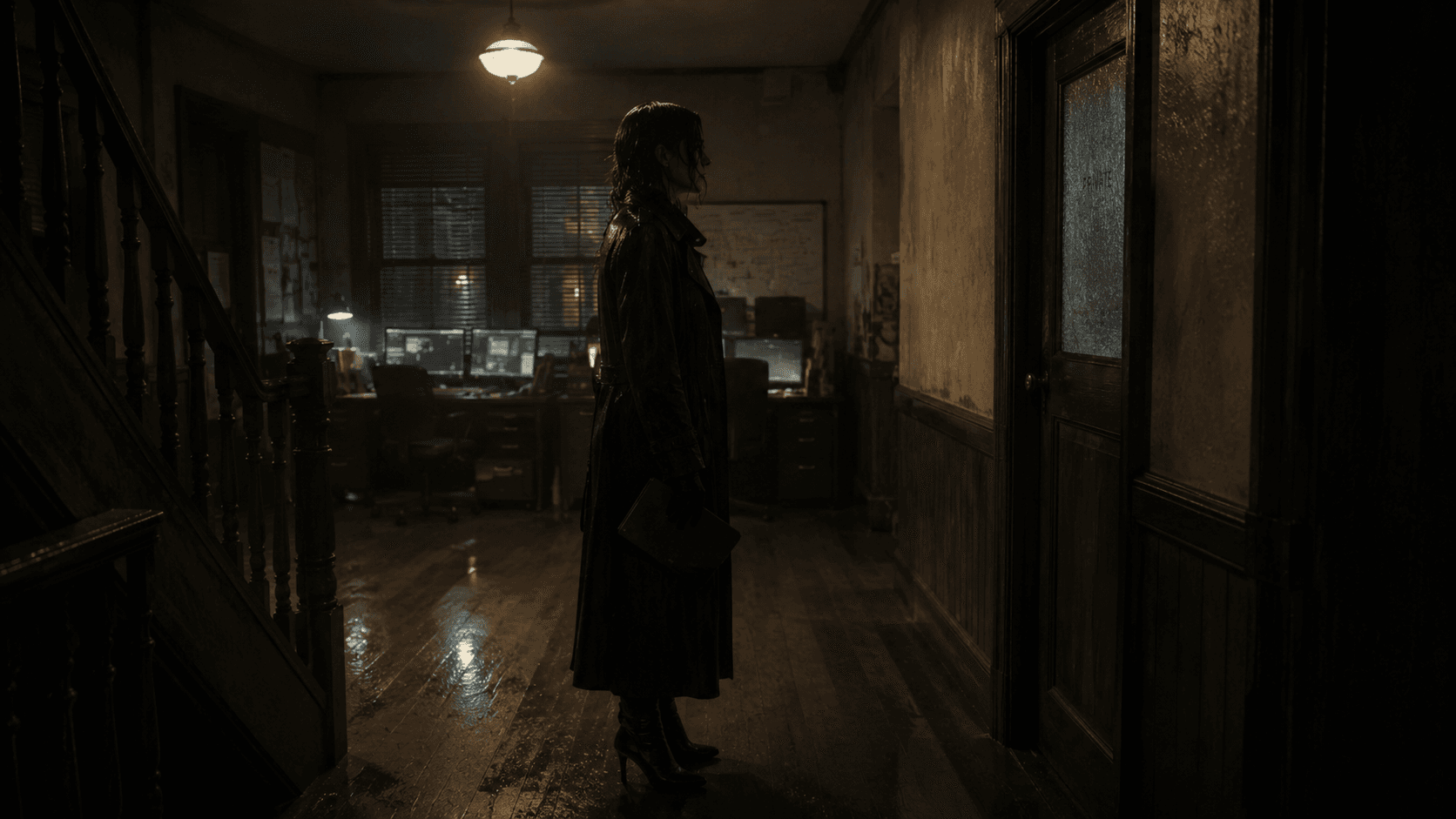
What caught my attention, though, was something else. In her hands, sheathed in thin leather gloves, she carried — carefully, like a treasure — a perfectly unremarkable grey folder. Cheap, dense pressed cardboard, with old cloth ties. The kind of clerical eyesore used by hardened archive clerks, meticulous auditors, or petty civil servants. No markings, not a single logo, not a single clue. The most boring, grey, faceless object in the world.
And it was precisely that deliberate facelessness that made every one of my internal alarms start howling.
The woman didn't take a single step toward the chair I'd offered. For a few seconds she silently scanned my office, thorough as a scanner. Her gaze slid over the row of three dead monitors, lingered on the whiteboard covered edge to edge in chaotic arrows, database blocks, and unreadable abbreviations — lingered a beat longer than idle curiosity would explain — and settled on the forgotten, long-cold cup of coffee, filmed over.
At last, her cold eyes settled on me.
"Are you Michael Lawson?" Her voice was low, even, without a trace of extra emotion.
"Yes, that's me. And you?"
"My name is Helen." She said it quickly, casually, as if the name itself were, right now, the least important detail of everything she was about to say. "Remember it. It may soon be the last name you need to keep in your head."
She gave a barely perceptible nod — as if simply checking off a box on some private list of her own, confirming something she hadn't doubted for a second to begin with.
Then she took a step forward and said, calmly, almost casually:
"In a few hours, they're going to start deleting you."
The office went so quiet I could hear my own breathing. I said nothing. In the three years I'd been in this business, I'd had to sit through tons of nonsense. I'd been told with total authority that Google would swallow my modest startup whole and not even notice. I'd been prophesied that new technologies would leave people like me begging on street corners. I'd been warned that independent developers couldn't survive anymore in an age of corporate giants.
But the phrasing Helen had chosen, I'd never heard before in my life. It struck with a cold, surgical precision.
"I'm sorry?" I said, feeling a stupid half-smile freeze on my face.
She stepped up to the desk and set the grey folder down on the polished wood with a soft, almost careful motion. Without opening it.
"Not kill you, Michael. Not arrest you. Not even blackmail you." She hammered out each word like driving in a nail. "Delete you. Your accounts. Your backups. Your verified data. Your digital reputation. Your life."
She spoke with a frightening calm. The same tone an experienced oncologist uses to deliver a patient's final test results — no pity, no drama, simply stating a fact, once they realize there's no more point in lying or comforting.
My throat had gone dry. I swallowed, trying to force some of the old confidence back into my voice:
"And why the hell would I believe you?"
Instead of answering, Helen slowly, without any sudden movements, pulled a slim smartphone in a matte case from her coat pocket. Her fingers moved quickly and easily across the screen. She turned the display toward me.
On the bright screen glowed my personal page on a major professional directory. My best studio headshot — the one I'd taken three years ago and never gotten around to updating, though I'd meant to. My name, spelled out in bold. The exact address of this very office. A long feed of positive client reviews from the past five years. My digital self, built brick by brick.
She gently tapped the screen, refreshing the page.
The display flickered for a second. A white background. And a single line, centered: "Error 404. Page not found."
My heart skipped a beat.
Without a word, she opened another tab — a major international freelance platform, where I had a top-rated account. Same thing. A blank screen.
She opened a third, an independent banking register. There the message was even more terse: "This profile is unavailable or does not exist."
I felt a sharp, sticky cold spreading from somewhere in my stomach, crawling slowly up under my ribs, catching in my throat. It was physically unpleasant. The professional security part of my brain kept insisting, desperately: this can't be real, this is duplication, a mirror, local spoofing, a cheap trick.
"That's not possible," my voice came out flat, foreign, hoarse. "Serious services run triple redundancy on their data. You can't erase an identity with a snap of the fingers — you'd need to simultaneously hack and synchronously wipe at least three independent infrastructures."
"You're reasoning as if someone's hacking them from the outside," Helen said, quiet but distinct, and for the first time a live, human note cut through her voice. Fear. "Half an hour ago it was only my profile that was gone. Now people I've been trying to reach along the chain are starting to vanish without a trace. This isn't a hack, Michael. It's as if the registries themselves suddenly agreed with each other that we never existed."
She took another half-step forward and, for the first time, looked me straight in the eyes — deep into the pupils, leaving no room to dodge an answer.
"That's why I came to you, Michael. Came before it's too late. For both of us."
Not because I believed this absurdity outright, without question. My brain, trained by years of fighting system failures and hacker attacks, simply refused to panic. Instead, out of habit, with a groan, it switched into its cold analytical mode, frantically running through the technical possibilities.
Phishing. A good one, prepared well in advance. Fake pages generated on the fly. A local DNS spoof on her smartphone. A cleverly configured proxy. Or a classic man-in-the-middle attack.
Over the years I'd seen enough elaborate digital tricks, forensics, and compromises that a cheap demonstration wasn't going to rattle me easily. Any illusion online can be taken apart bolt by bolt, if you know where to look.
But... some instinct, the same gut sense that usually saves me when servers go down, kept whispering, insistently: something here is fundamentally wrong.
Without asking, I snatched the phone out of her hand. My fingers kept slightly missing the virtual buttons in the dim light of the office, but I stubbornly closed the current browser session. Cleared the cache. Opened a fresh tab and started typing in my own profile by hand. Not following her suspicious links. Through a direct, independent search query.
Nothing. The results were just a scatter of unrelated junk.
I tried another, deeply obscure professional service that most people didn't even know existed. Then a third.
Nothing. Scorched earth, all around.
As if the last ten years of my damned dense, legal, active professional life had been methodically erased, pixel by pixel, right off the servers, by someone with a very careful eraser.
I slowly raised my eyes, feeling a heavy lump rising in my throat.
"Who are you, really? How do you know all this in advance?"
She didn't answer. Instead, Helen flicked her wrist up sharply and glanced at the face of her elegant watch. The gesture was so automatic, so nervous and practiced, that I understood at once: for her, right now, time held a completely different, lethal value. Far greater than it did for me.
"We have nineteen minutes left," she said, quiet but firm.
"Until what?"
"Until they finally cross-reference the logs and realize I came straight to your gateway. To you specifically, Michael."
"Who the hell are 'they'?!"
Instead of explaining, she pulled at the cloth ties of the grey folder. The dense cardboard fell open with a quiet rustle.
Inside wasn't what the imagination usually conjures at moments like this: no compromising photographs, no stacks of hundred-dollar bills, no secret documents stamped with intelligence-agency seals. Just a stack of a few dozen perfectly ordinary, standard A4 sheets of paper. Slightly crumpled at the edges.
Every inch of those pages was crammed mercilessly with dense tables. Small type, endless columns, dry arrays of numbers, dates, hexadecimal hashes.
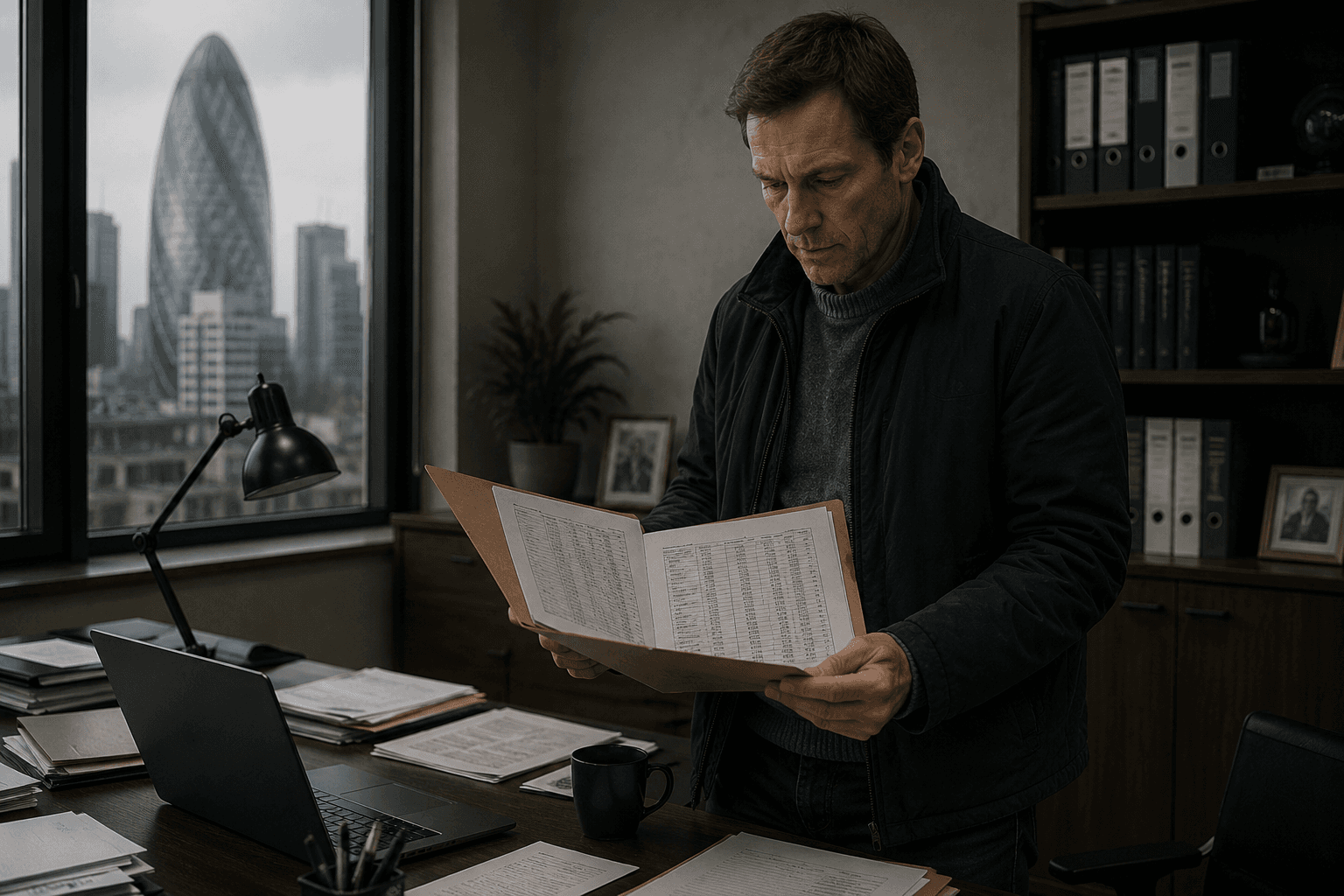
At a glance, it looked like the dull, routine bookkeeping of some logistics center. But look again...
Something stirred inside me — that painfully familiar feeling of the hunt. The same thing I felt whenever, among millions of grey, monotonous lines of a system log, I suddenly stumbled on a single, barely visible anomaly. A small hook that broke the whole picture open.
Everything here looked too correct. And it was precisely that sterile, perfect correctness that gave off an unnatural, manufactured ugliness.
I reached out and pulled the folder toward me without ceremony, into the pale light from the street lamp outside. A sharp, acrid smell of cheap laser-printer toner hit my nose.
"What is this?" I ran a finger along the top line.
"Data."
"What kind of data, exactly? This is impossible to make sense of."
"Real data," she said, weighting the word as if it were cast from lead.
I raised my head and looked at her questioningly, demanding a proper explanation.
"Everything currently sitting in government databases, in the cloud, in banking systems and corporate archives can be rewritten." She touched the pages lying in front of me with her fingertips, gently, almost intimately. "This can't be."
"Why not?"
"Because three days ago my service flagged the first wave of anomalies — small, seemingly meaningless desyncs in the registries. I didn't understand what it was at the time, but as a precaution I printed out everything I could in the archive department, which isn't physically connected to the general network. Professional paranoia. Today it bought us both a few hours."
I frowned, still refusing to accept this unsettling logic.
Helen read my skepticism instantly. And for the first time in our short, insane acquaintance, something like a bitter, endlessly tired smile crossed her pale face.
"Funny, isn't it?" she said quietly, looking at the stack of pages. "We spent a good twenty years in a digital haze, working hard to convince ourselves that paper was a relic of the past, an ugly vestige about to disappear. And now it turns out to be the one storage medium left on the planet that can still, somehow, be trusted. The one thing that can't be remotely formatted."
My fingers settled on the edge of the top sheet, meaning to turn it over and start reading the first table, when suddenly a distinct, soft click sounded in my left ear.
And then a familiar voice unexpectedly spoke through the headset.
My heart dropped straight into my heels. The connection had been cut. I was absolutely, rock-solid certain of it — I'd disconnected it myself and switched off the console a couple of minutes ago. The cord was dangling loose on the desk.
That was exactly why her voice, sounding right there in my ear, was the most terrifying sound I had ever heard.
"Michael."
I froze, the page still unturned. Slowly, by the millimeter, I raised my head. The air in the office felt like it had turned to liquid nitrogen.
"What—?" I managed to force out, barely audible.
"I am not active," the voice said.
A deafening, dead silence fell over the room. All I could hear was a rare, heavy drop of rain outside striking the windowsill: drip... drip...
I looked over at Helen. A shudder crossed her face in the dim light from the street. I could physically feel her go pale, stepping back a pace, toward the door.
"Michael..." The voice in the headset stayed just as even, just as frighteningly calm and measured. "My module has no power. Someone is using my voice profile right now."
I tore the headset off my head so hard the cord snapped taut, and the flimsy plastic housing hit the scarred edge of the wooden desk with a dull, dry thud.
Silence. A merciless, crushing silence flooded the office instantly.
The voice was gone, leaving behind only a faint ringing in my ears. I fell forward against the desk, frantically flipped over the little plastic audio hub, and stared at the tiny power-indicator LED.
Dark. Deathly grey.
No green light at all. The battery compartment gaped, empty and black — the lithium-ion battery was sitting in a cigarette pack on the edge of the desk, taken out an hour earlier. I'd removed it myself. An old, deep-seated paranoid habit. At the end of every workday, I physically powered down anything with even a theoretical ability to listen, record, or transmit sound.
What I'd just heard was physically impossible. And it was exactly that impossibility that frightened me more than the words themselves.
Helen stood motionless, her wide eyes fixed on the now-silent piece of plastic. She didn't ask if I'd heard it. She could see it on my face.
"What did she say?" Her whisper felt louder to me than a gunshot.
"That her module has no power." I didn't recognize my own voice. "That someone's using her voice profile."
"She said it to you." Helen said it slowly, as if weighing each word. "Only to you. I was standing a meter away. The room was quiet. Not a sound came out of that headset."
She shook her head slowly, with a kind of dazed horror, as if proving to herself just how surreal the situation was.
For a few seconds we simply stood there, frozen, staring at each other. The air between us seemed to thicken into something like gel. I reached out again and picked up the headset. Cold, cheap plastic. No hidden lights. No sign of life. Just ordinary dead analog junk.
And then—
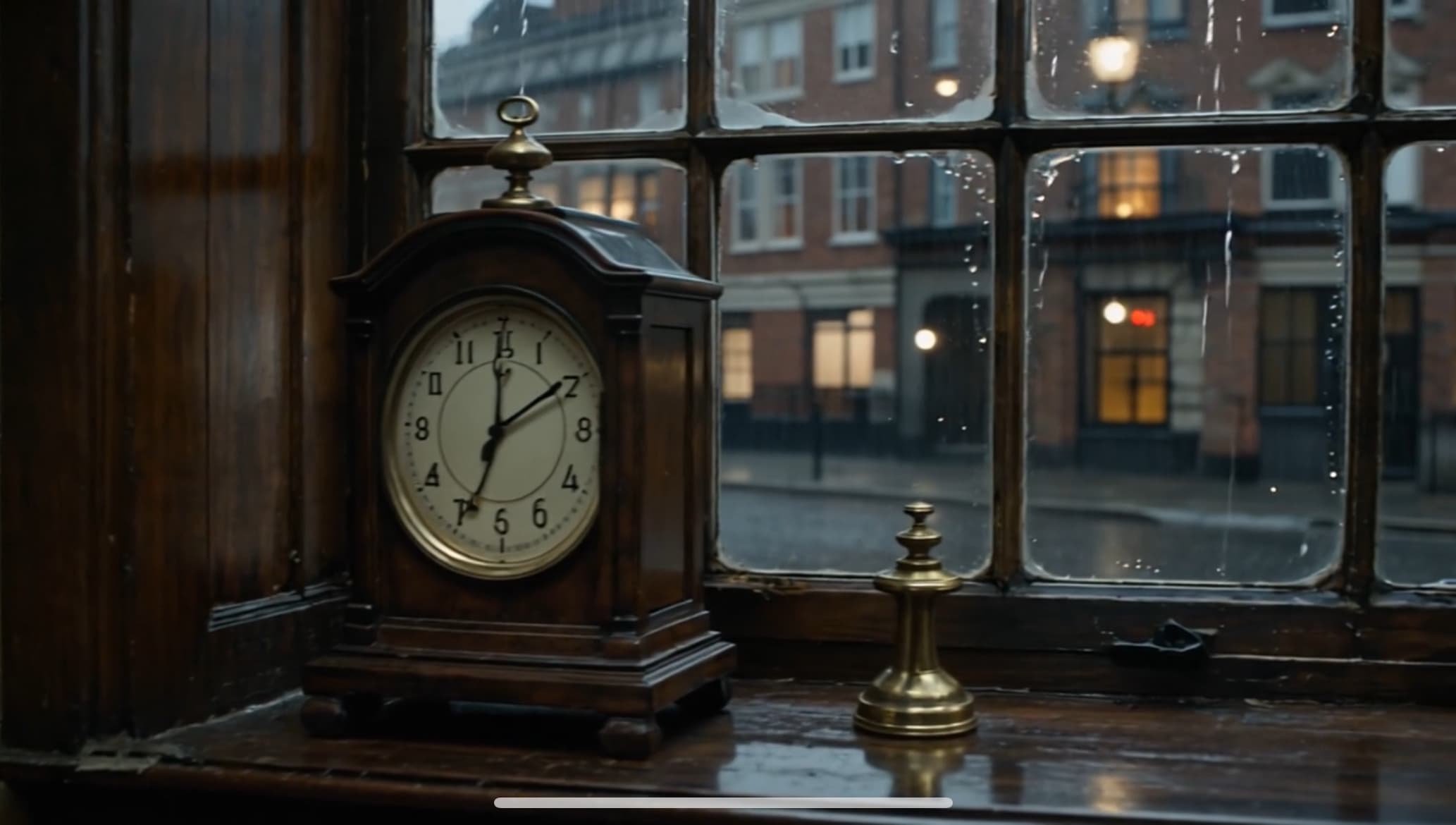
A short, dry buzz sliced through the heavy silence. The phone on the desk vibrated furiously, demandingly, jumping against the polished wood.
It wasn't my personal phone. It was the old, battered work handset that started rattling — the "dirty" number I only gave to a handful of steady, years-long clients.
A rectangular notification lit up on the matte screen. New message. In the sender field — an ominous blank. No number, no name, no hidden ID. Just a system dash.
I touched the screen with a numb thumb and opened the thread.
There was just a single line, typed in a small, blocky font:
Don't talk to Clara
I felt an icy sweat crawl slowly, stickily, down my spine, all the way to the small of my back.
Helen didn't even try to step closer or look over my shoulder to read the screen. From the color draining out of my jaw, she already understood everything.
"Too late," she said, her voice dropping to something barely more than a rustle.